
Sea Freight Through Fremantle
Where your container actually lands
Almost all of Western Australia’s container trade comes through Fremantle, so if your goods are in a container, that is where they are landing. The port runs as two harbours. The Inner Harbour at Fremantle takes the containers, along with motor vehicle imports, livestock exports and general cargo. The Outer Harbour at Kwinana, about 22 kilometres to the south, is the bulk port, handling grain, fertiliser, petroleum, alumina and mineral sands.
What happens to your container
The customs entry goes in off your documents before the vessel berths, rather than after the box has landed. A container that is already cleared can be collected as soon as it comes available. One that is not sits on the wharf building up storage charges, and that is a cost nobody quoted you.
Which is why we ask for the supplier invoice and the packing list as early as you can get them, not when the ship is a day out of Fremantle. From 1 September to 30 April there is the stink bug season on top of that, which catches goods shipped from a long list of countries. We have set out what applies this season and which date decides it.
Once it is released we book the slot, collect it from the wharf and deliver it anywhere in Perth or across to the eastern states, then get the empty back before detention starts.
Getting containers out of the port
Roughly a quarter of the containers moving through the Inner Harbour leave by rail rather than by road, out of the North Quay Rail Terminal, which runs five to seven trains a day carrying between 400 and 700 boxes. The rest go by truck through the marshalling area at Rous Head. Which one suits your freight depends on where it is going and how fast you need it, so it is worth asking rather than assuming the truck is the only option.
Tell us the vessel, the container number and where it has to go, and we will take it from there.
FCL (Full container load)
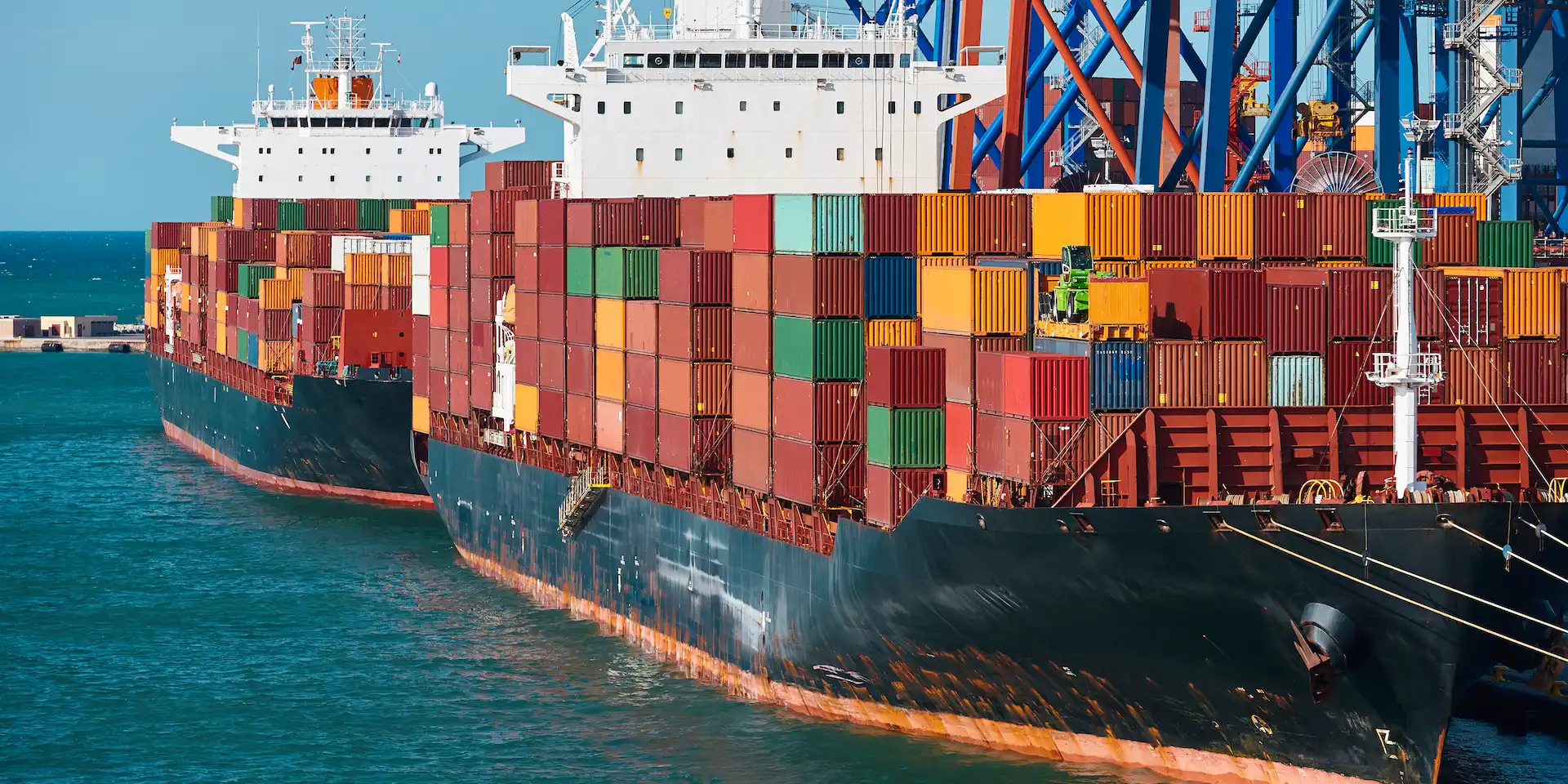
Do you have enough cargo to fill a sea freight container? If so, Red Nav can assist you with shipping your full container at the most affordable price, whilst allowing you to have control over the volume, route and service. If you have ever wondered whether you are paying too much on an import, we break the charges down here.
LCL (Less than a container load) Shipments
Motor Vehicle Shipping
Whether you would like to import the vintage Rolls Royce you have been dreaming about since you were 18. Or export multiple vehicles to overseas markets. Our team at Red Nav can offer this service to you, we have a lot of experience in shipping motor vehicles, machinery and parts and would be happy to assist you with service. If the vehicle is only coming in for a while and going back out again, you will most likely need a Carnet.

Australian Coastal Shipping
The economic advantages of coastal shipping remain largely unexplored, due to the good rail and road connections between the larger commercial centres. However, when considering transporting dense items, containerised coastal shipping is truly an economical option. Especially when the origin and the destination are close to the container port, it really makes coastal shipping virtually unbeatable. Contact our team and we can assist you with you coastal shipping requirements. We have written more on the savings coastal shipping can offer.
RORO Shipping
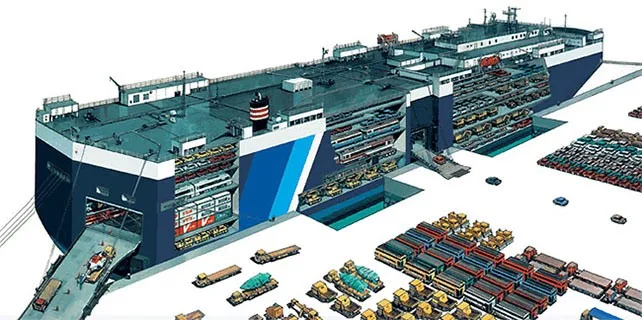
Roll on Roll off ships are loaded and discharged by moving cargo on wheels over a ship’s ramp, in or out of what is essentially a large floating parking garage. RoRo ships have the advantage that they do not require shore cranes to load or discharge, consequently the port handling charges are significantly reduced and in times of industrial action RoRo’s often are the only vessels still capable of calling in ports and work their cargoes. Additionally, often it is possible to ship out of gauge cargo too large for containers, economically on a RoRo. Shipping a container on a RoRo is usually not viable, as one pays for the complete volume taken up by the container. But when shipping any vehicle that is capable of mounting the ramp under its own power it is always worth getting a RoRo quotation. Dangerous and temperature-controlled consignments are not suitable for RoRo vessels. For anything urgent or temperature sensitive, air freight is usually the better answer.
Breakbulk Shipping
Breakbulk is the old fashioned conventional way of shipping packed cargo, as opposed to ‘bulk’ that is loose and unpacked cargo. If a product is shipped in drums, crates, boxes or casks it is breakbulk cargo. Breakbulk greatly increases the time a vessel has to spend in port to load or discharge and currently has lost most of its support in favour of containers. Also planning and securing the load going into a vessel is a lot more complicated, especially if there are trans-shipment ports to contend with.

Oversize loads (out of Gauge) containers
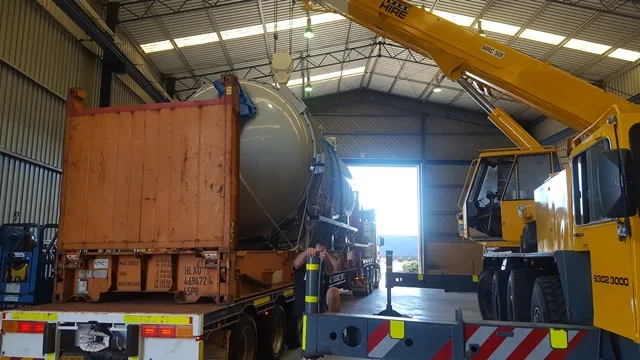
If your consignment is too wide, high or heavy to fit a standard ISO frame, often we can still use a flatrack container to ship your goods. Getting an oversize load to the wharf is a job in itself, and our road transport team handles that end too.
Refrigerated ("Reefer") containers
If you have perishable cargo to transport in a temperature controlled environment, reefer containers might be your answer. With temperature settings from minus 40 to plus 60 centigrade, most temperature sensitive traffic is catered for by reefers.
Request a Shipping Quote
Road Transport
Road freight offers a classic and flexible solution to transporting local goods.
Sea Freight
Shipping is the best method for moving large quantities of your product in a cost-effective manner.
Air Freight
When you want to get your cargo to your destination urgently
Moving Overseas
We can ship your personal belongings for you