
BMSB season 2026-27 What importers need to know
Container loading from Europe or North America before 30 April? The treatment has to be arranged before the vessel loads, not after. 08 9303 2110
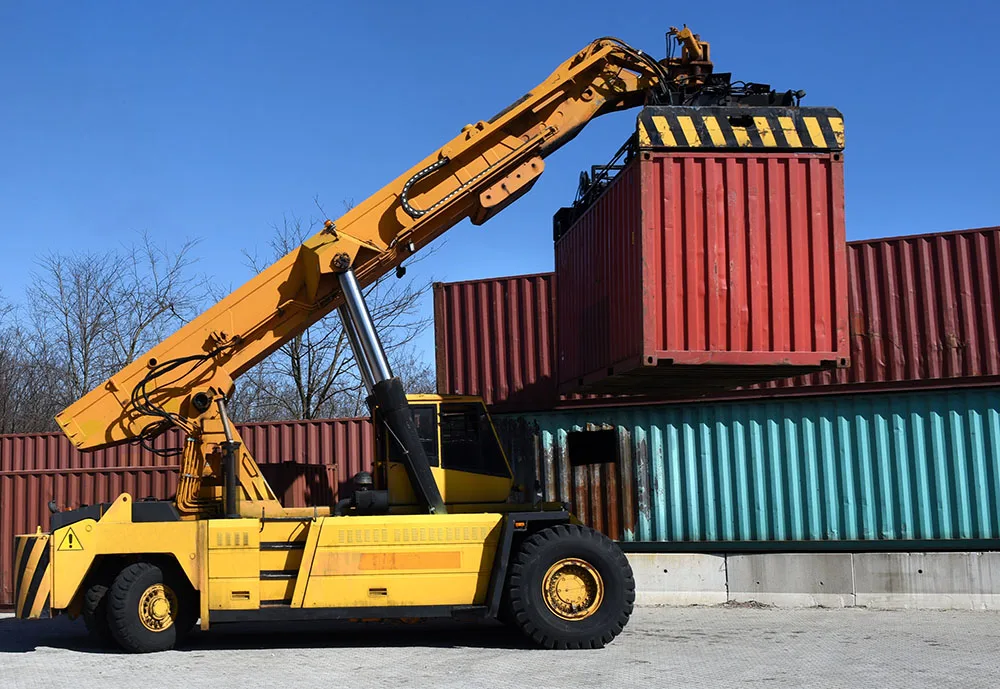
Brown marmorated stink bug (BMSB) season is open. Two tests decide whether your cargo is caught, and both have to be met.
The country test. The goods were manufactured in a target risk country, or shipped from one. Either is enough.
The date test. The vessel loaded them on board between 1 September 2026 and 30 April 2027 inclusive.
Which date decides
The Department uses the shipped on board date on your Ocean Bill of Lading, and gate in dates are not accepted. Getting a container into the terminal before 1 September does not exempt it. If the vessel loads on or after that date, the measures apply, no matter when the box arrived at the port.
Check the shipped on board date on the bill of lading, not the booking and not the gate in receipt.
Which countries
Thirty-eight countries are on the target risk list. Most of central, southern and eastern Europe, plus Canada, the United States, Türkiye (Turkey), the Caucasus and Central Asia.
Worth knowing what is not on it. Denmark, Sweden, Norway, Finland, Ireland, Estonia, Latvia, Lithuania, Belarus, Cyprus and Malta are all absent. So is the United Kingdom, which sits on the emerging risk list instead. If you load out of any of those, the cargo measures do not apply on country of origin alone.
The full list. Albania, Andorra, Armenia, Austria, Azerbaijan, Belgium, Bosnia and Herzegovina, Bulgaria, Canada, Croatia, Czechia, France, Georgia, Germany, Greece, Hungary, Italy, Kazakhstan, Kosovo, Liechtenstein, Luxembourg, Moldova, Montenegro, Netherlands, North Macedonia, Poland, Portugal, Romania, Russia, Serbia, Slovakia, Slovenia, Spain, Switzerland, Türkiye (Turkey), Ukraine, United States, Uzbekistan.
China, Japan and the Republic of Korea are not target risk countries for cargo treatment. They appear in two other places: the vessel surveillance rules further down, and the emerging risk list, where cargo can still be pulled for inspection.
The list changes between seasons. Check the Department’s current list before you book.
Which goods
The Department targets goods by tariff classification, not by description, which is why classification goes to a licensed customs broker. Ours does it as part of the job.
Twenty-three tariff chapters are target high risk and require mandatory treatment. The ones that catch most containers out of Europe are the metals and machinery, not the obvious timber:
72 to 83 iron, steel, copper, nickel, aluminium, lead, zinc, tin, other base metals, tools and articles of base metal.
84 machinery and mechanical appliances. 85 electrical machinery and equipment.
86 railway rolling stock. 87 vehicles and parts. 88 aircraft. 89 ships and boats.
44 wood. 45 cork. 57 carpets and textile floor coverings. 68 stone, plaster and cement articles. 69 ceramics. 70 glass.
If you import machinery, metal goods, vehicles or parts from Europe, assume you are caught until your broker says otherwise.
A second, shorter list is target risk. Those goods are not treated, they are subject to random inspection on arrival:
27 mineral fuels and oils. 28 inorganic chemicals. 29 organic chemicals. 38 miscellaneous chemical products. 39 plastics. 40 rubber. 48 paper and paperboard. 49 printed books and printed matter. 56 wadding, felt, twine, cordage and rope.
Anything in neither list is outside the measures, unless it shares a container or consignment with goods that are in one.
Goods in iso-tanks, and bulk cargo carried in the hold, are listed as outside these seasonal requirements. That is an exemption from the BMSB measures specifically, not from biosecurity generally.
Refrigerated containers, running or not, are treated the same as sealed six-hard-sided containers. So reefer cargo is handled as containerised, not as break bulk.
Break bulk and flat racks
For these measures, break bulk includes goods on flat racks and in open top containers. It also picks up modified containers, the kind housing in-built generators, filtration plants or portable accommodation, and shipper owned containers on the same test. Once a box is modified it is no longer a sealed six-hard-sided container, so it is handled as break bulk. A standard shipper owned dry box is fine. A modified one is not.
That catches people. An open top is still a container in every other conversation you have about freight, and it is not one here.
If you are importing target high risk goods as break bulk and they have not been treated offshore before arrival, you have to answer yes to community protection question 642 on entry.
If you move break bulk or project cargo by sea, the treatment provider gets settled before the booking, not after. It has to be a provider listed as approved on the Department’s list. Certificates from providers listed as suspended, withdrawn or under review are not accepted, and neither are certificates from providers who are not on the list at all.
Vessels, not just cargo
There is a second trigger most people miss. Measures can attach to where the ship has been, not only where your cargo came from. A vessel that berths at, loads at or tranships from a target risk country inside the season can bring requirements with it.
Roll-on roll-off vessels have their own rules, and there are two of them.
All Ro-Ro vessels that berth at, load or tranship in a target risk country between 1 September 2026 and 30 April 2027 must carry out at least one crew inspection, answer specific questions in their pre-arrival report, and undergo a mandatory seasonal pest inspection on arrival.
Heightened vessel surveillance runs longer, to 30 June 2027, and adds China, Japan and the Republic of Korea to the countries that trigger it. Both apply to the vessel itself, not to the goods on board.
One more. Goods that have transhipped through or entered New Zealand during the season and then shipped to Australia are not permitted in without treatment meeting Australian requirements.
What changed for 2026-27
Updated by the Department 5 August 2026
If you relied on the Rolled Goods Policy or the Safeguarding Scheme last season, your process needs revisiting before the next shipment.
What treatment actually means
There are four approved treatments for BMSB, and your provider picks the one that suits the cargo:
Heat. 56°C or higher at the coldest surface for at least 30 minutes. Individual break bulk items under 3,000kg can instead be treated at 60°C for 10 minutes, with documentary evidence of the weight.
Methyl bromide. Dose and duration vary with temperature and end point reading.
Sulfuryl fluoride. As above, with a third party stewardship option also approved.
Topping up with extra fumigant at the end is not permitted, and if the concentration drops below the minimum end point at any stage the treatment has failed and has to be done again. That is a real risk when treatment is left late.
Ethyl formate is new for this season and is an onshore option, so it does not help you offshore.
The 120 hour rule
Offshore treatment is not open ended. Goods treated offshore have to be sealed into the container within 120 hours of treatment, and the sealing declaration has to be completed and signed by the exporter, the freight forwarder or the shipping company at the port.
Five days sounds generous until a vessel rolls. Build it into the booking rather than hoping.
Emerging risk countries
The United Kingdom, China, Japan and the Republic of Korea are listed as emerging risk countries this season. Emerging risk is not the same as target risk. There is no treatment requirement, but a container can still be pulled for random onshore inspection, and that costs time you have not planned for.
For these four countries only, chapters 39, 94 and 95 are also subject to random inspection on top of the usual target high risk goods.
Where it usually goes wrong
- The goods were never properly classified. Whether cargo is target high risk, target risk or neither comes down to its tariff classification, and that is your broker’s call. Ask before you assume treatment is or is not required.
- Treatment was left until arrival. Offshore is almost always faster and cheaper, and for break bulk it is the difference between clearing and being exported.
- The treatment provider was not on the current list. Not last season’s list. Providers move between approved, suspended and under review.
- An open top was assumed to be a container. It is not, for these measures.
We check this on every job. Before we confirm a booking we run the load port and the country of manufacture against the Department’s current list, and the tariff chapters go to our broker. If it is caught you get an email naming the treatment required, an approved provider at origin, and what it adds to the cost and the schedule, before the shipper packs the container. It is part of the booking, not an extra.
Once the vessel has loaded the options narrow to onshore treatment, or for break bulk, being sent back. The window to fix it cheaply closes at the booking.
Classification goes to our licensed broker. The Department’s list is the only answer that counts and your broker makes that call.
Tell us what is coming up Call 08 9303 2110Common questions
Does getting my container into the terminal before 1 September exempt it?
No. The Department uses the shipped on board date on the Ocean Bill of Lading. Gate in dates are not accepted.
Does this apply to air freight?
No. These measures are built around sea freight. The trigger is a vessel loading and an Ocean Bill of Lading, and the vessel provisions are about ships. Air cargo has its own biosecurity requirements, which are a separate conversation.
What if only part of my container is target risk?
If any of it is target high risk, the whole container is. Clean goods packed alongside are treated with them and held with them, and the container cannot be unpacked first to separate them out. If the co-packed goods are target risk rather than target high risk there is no treatment requirement, but the whole container carries the same inspection risk. Either way it is worth knowing before the container is packed rather than after.
Can my cargo be treated after it arrives?
Containerised goods can be directed for onshore treatment, but it is a fallback rather than a plan. The container sits while it is arranged and carried out, and that time is usually chargeable. Onshore treatment happens at container level and the goods cannot be deconsolidated first. Target high risk break bulk has no onshore path at all.
How long do the measures run?
1 September 2026 to 30 April 2027 inclusive, based on the shipped on board date. The arrival date does not matter. Cargo loaded on 29 April that berths in June is still inside the season. Ro-Ro vessel surveillance runs longer, to 30 June. The Department reviews the measures during the season and can adjust them.
Already booked and BMSB has not come up? Send us the bill of lading. We will check the shipped on board date and the load port and tell you whether it is caught, and our broker will confirm the classification. It may be too late to treat offshore, but you will know what you are facing before the vessel berths.
Send us the bill of lading Call 08 9303 2110Source and status. This page summarises the published seasonal measures of the Department of Agriculture, Fisheries and Forestry. Their seasonal measures page is the authority and should be checked before you act on anything here. Last checked 3 September 2026.
This is general information about published measures, not advice on any particular shipment. Red Nav is a freight forwarder. We are not licensed customs brokers, and classification and clearance are handled by our licensed broker. Red Nav handles sea freight and air freight for Australian importers and exporters.